Mesh Cosmetic Bags, Manufactured to Order
Breathable, quick-drying and easy to inspect at a glance. We build mesh cosmetic bags to your spec on the same lines as our stocked styles.
Why buyers spec mesh
A mesh cosmetic bag lets the contents breathe and dry after gym, pool or travel use, and lets retail customers see the product inside without opening a zipper. It is one of the most requested constructions in our custom program.
We run polyester mesh alongside our standard fabric range of 190T to 1200D polyester and 110 to 280 g nylon, so panels, linings and zipper tapes can be mixed to hit your target hand feel and price. Pantone color matching is held to Delta E 2.0 or better.
Mesh styles are made to order: send a reference photo or tech pack and we will sample it in 1-10 days. MOQ for custom cosmetic bags is 500 pieces.

Styles from our catalog
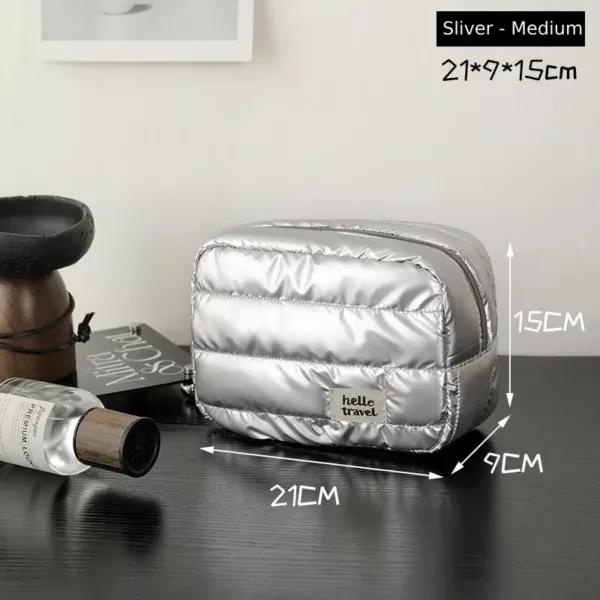
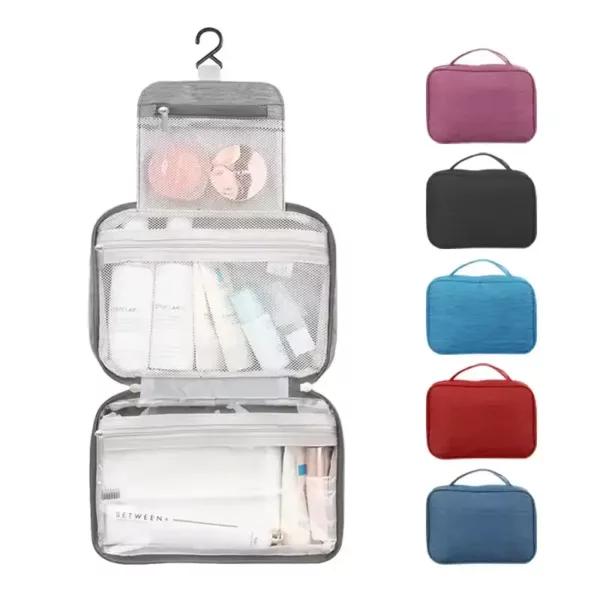
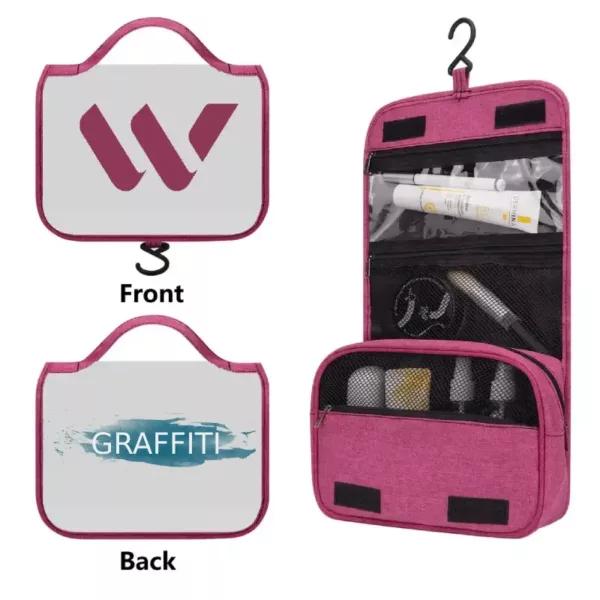
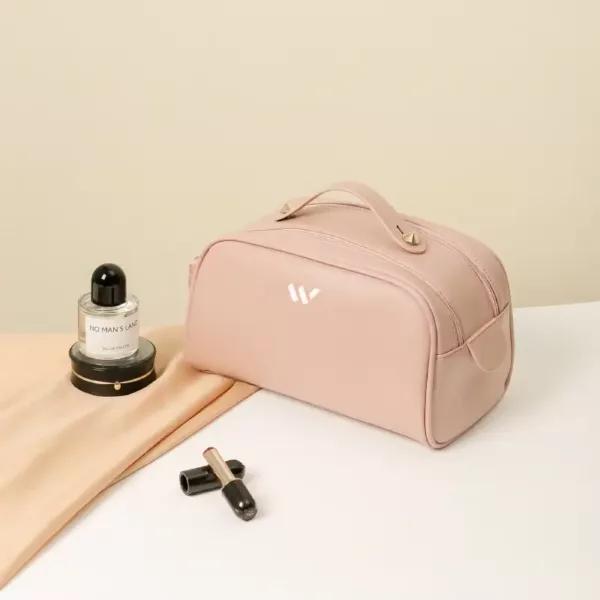
Mesh constructions are built to order. The styles above share the closest materials and shapes in our current catalog; several, like the MB-6202, already use mesh compartments inside.
Buying questions, answered
Can you copy a mesh bag from a photo?
Yes. Send reference photos or a tech pack and our design team will engineer the pattern. A paid sample follows in 1-10 days, with one revision round in 2-3 days.
What is the MOQ for mesh cosmetic bags?
500 pieces, the same as our other custom cosmetic bags. Pantone matching for a single color starts at 200 pieces.
Which logo options work on mesh?
Woven labels from around 300 pieces and metal plates from around 200 pieces travel well on mesh panels; heat-pressed PVC logos suit the solid trim panels.
Ready to sample your cosmetic bag line?
Send your brief and reference photos. Paid samples in 1-10 days, revisions in 2-3 days.
Materials and Construction Options for Mesh Cosmetic Bags
A mesh cosmetic bag looks simple until you cut one open. The mesh is only half the story. What matters is the combination of mesh, liner, binding, and seam construction. A buyer who specifies only "mesh" will get whatever the factory has on the shelf, and that is rarely what the end customer needs.
Mesh is an open structure used for ventilation, visibility, stretch pockets, or lightweight organization. The reference lists it as one material among many, but in a cosmetic bag it does real work. It lets air reach damp brushes. It lets a user see a lipstick without opening the pouch. It also lets fine powder escape, lets liquids pass through, and snags on hardware if the weave is too open.
The realistic material choices come down to polyester mesh, nylon mesh, and a few hybrid constructions. Polyester mesh is dimensionally stable and widely printable. Nylon mesh gives better strength-to-weight performance and abrasion resistance. Neither is waterproof on its own. That is where the liner comes in. A wipe-clean liner reduces absorption, and welded or sealed seams provide better leak containment than ordinary stitched seams. A stitched mesh bag may still use a removable waterproof insert when full seam sealing is unnecessary.
Here is a comparison buyers should keep on the desk while comparing supplier quotes.
| Material choice | What it is good for | Where it fails |
|---|---|---|
| Fine polyester mesh | Visibility, clean look, low cost, printable, stable shape | Weak tear resistance at seams, snags on sharp tools, holds odor if unlined |
| Coarse nylon mesh | Drainage, stretch pockets, wet items, high abrasion resistance | Poor powder containment, can scratch glossy product surfaces, higher unit cost |
| Mesh with clear film pocket | Content identification, wipe-clean performance, liquid isolation | Film can yellow over time, stiffer hand feel, film edge can delaminate |
| Mesh with coated fabric liner | Leak resistance, structure, opaque privacy for personal items | Adds bulk, hides contents, liner seam can trap residue |
| Mesh with removable insert | Cleaning, isolating spills, wet or spill-prone items | Insert gets lost, adds a second piece to track, higher assembly cost |
Construction details change the outcome as much as the raw mesh. A hanging hook requires reinforcement because the complete load is concentrated at one attachment point. Elastic loops separate cylindrical containers, brushes, and small tools. Brush guards and protective flaps reduce contamination and prevent bristles from contacting other contents. These are not add-ons. They are specification decisions a buyer makes before the sample is cut.
How Buyers in Different Situations Should Specify This Product
Say a buyer is sourcing for a subscription box brand. The mesh cosmetic bag ships inside a monthly kit, it must be light, and it will be photographed flat. This buyer should specify a fine polyester mesh with a printed logo, a simple zipper, and no liner. The bag is a gift, not a daily tool. A coarse nylon mesh would look industrial in the photo. A coated liner would add cost and weight for no reason. The specification decision that actually changes the outcome here is print compatibility, because the mesh weave must hold a clean logo without ink bleeding through the holes.
A buyer who supplies spa and salon retailers faces a different problem. The mesh bag holds damp brushes and half-used product bottles. This buyer needs drainage and cleanability. A coarse nylon mesh with a drainage eyelet makes sense. The reference describes a drainage eyelet as a reinforced opening that allows water to escape from a washable or wet-use compartment. The bag may also need a removable insert so a customer can isolate a leaking oil bottle. Here the specification decision is the eyelet plus the insert, not the mesh alone.
Then there is the buyer who sells travel accessories at airport shops. The mesh cosmetic bag sits next to clear PVC pouches and hanging toiletry bags. This buyer needs the mesh to show contents quickly at security, but the bag must also survive being overstuffed. A mesh with clear film pockets solves the visibility problem while the film pockets contain small items that would otherwise fall through the mesh. The specification decision is the film pocket placement and the seam reinforcement around each pocket, because a torn film pocket is the first thing a traveler complains about.
A fourth situation, and a common one, is the promotional buyer. They need 5,000 mesh cosmetic bags for a trade show, in one color, with a small logo. Cost per unit is the whole game. This buyer should specify the lightest fine polyester mesh, no liner, no eyelet, no insert, and a simple heat-cut edge instead of a bound edge. The decision that changes the outcome is edge finishing. A bound edge looks better but adds a second operation and more material. A heat-cut edge is faster and cheaper, and at a trade show nobody inspects the seam.
Customization That Changes Tooling, Cost or Lead Time, Versus Customization That Does Not
Some changes are free. Others trigger a new mold, a new cutting die, or a longer production window. Buyers who know the difference negotiate better and avoid surprise invoices.
Changing the mesh color, the zipper color, the puller style, or the printed logo on an existing pattern does not change tooling. The factory already has the cutting die and the seam pattern. The change is material substitution, and it affects unit cost only if the new mesh or zipper costs more. Lead time stays roughly the same. A buyer who wants a pink mesh instead of black can ask for that without expecting a setup charge.
Changing the bag dimensions changes the cutting die. That is tooling. A mesh cosmetic bag that grows from 20 centimeters to 24 centimeters wide needs a new die, new marker layout, and possibly more mesh per cut. The cost is not huge, but it exists, and the lead time stretches because the die must be made and tested. Same story for adding a new pocket shape. A rectangular mesh pocket uses an existing die. A curved pocket with a gusset needs a new one.
Adding a hanging hook changes the construction sequence. The hook must be sewn in before the binding closes the top edge, and the attachment point needs a reinforcement patch. That is not tooling in the mold sense, but it changes labor and can add a day or two to the sample. A buyer who wants a hook should say so before the first sample, not after.
What about changing the mesh itself? Going from a fine polyester mesh to a coarse nylon mesh is a material substitution, not new tooling, but the seam behavior changes. Nylon mesh stretches more under load and recovers. The sewer may need to adjust tension, and the seam allowance may need to be wider. The sample will tell. A buyer who switches mesh types should expect a revised sample and should not approve production until they have pulled on the seams.
Logo application is the area where buyers most often misunderstand cost. A printed logo on mesh is cheap and fast. An embroidered logo on mesh is a different process, and the mesh weave can distort under the needle. A woven label sewn onto the mesh is also cheap but adds a visible backing on the inside. None of these require new tooling, but embroidery and woven labels add per-unit cost and can extend production if the label must be ordered separately. The honest rule is this: if the change affects the cutting die, the mold, or the sewing sequence, it changes tooling or lead time. If it only swaps one material for another, it usually does not.
What to Check Before Approving Production for Mesh Cosmetic Bags
The reference is clear about cleanability and leak control, and those are the areas where mesh bags fail first. A buyer should not approve production until the sample has been pulled, stretched, and wiped.
First, check seam strength at the mesh-to-binding junction. Mesh is an open structure. The yarns at the cut edge can pull out of the binding if the seam allowance is too narrow. Ask for a generous seam allowance on mesh panels, and pull hard on the sample. If the mesh yarns slide out, the factory needs to add a reinforcement tape or change the binding method.
Second, check the liner claim. If the bag is sold as leak-resistant, the buyer must know what that means. Leak-resistant construction delays liquid escape but is not guaranteed to remain liquid-tight under pressure. Leakproof construction is designed and tested to prevent liquid passage under stated test conditions. These are not the same thing, and a buyer who writes "leakproof" on a purchase order without a test condition is asking for a dispute. If the bag has a wipe-clean liner, check that the liner is actually smooth and coated, not just a thin fabric that absorbs oil.
Third, check the mesh opening against the smallest item the bag will hold. A small tube might slip through a coarse mesh under pressure. Measure the actual mesh swatch against the smallest item. If the item can pass through, the buyer needs a finer mesh, a film pocket, or a liner. This is a claim control issue. The catalog copy cannot say "holds all your essentials" if a lip balm falls out in the customer's handbag.
Fourth, check the zipper and the puller. Mesh bags often use lightweight zippers because the bag itself is light. But a mesh bag with a hanging hook gets pulled from that hook, and the zipper takes the load. Open and close the sample twenty times. If the slider catches on the mesh, the factory should add a zipper guard or change the mesh orientation at the top edge.
Finally, check the colorfastness of the mesh and the binding. Mesh is often dyed in bright colors, and the binding is a different material. Rub the sample against a white cloth. If the color transfers, the bag will stain a customer's white leather purse. This is a real complaint, and it is avoidable with a simple rub test before production starts. For buyers who want a deeper look at material behavior, the makeup bag materials guide covers shell fabrics, coatings, and liners in more detail. A buyer comparing mesh against clear PVC should also read the clear PVC makeup bags page before committing to one construction. And if the mesh bag is part of a larger travel set, the hanging toiletry bag page shows how hooks and organization work in a different silhouette.