Custom Cosmetic Pouch Development, End to End
Your fabric, hardware, lining, logo and packaging. 100+ in-house designers turn a reference photo into a production-ready pouch.
Custom cosmetic pouches at a glance
| MOQ | 500 pcs per style; single-color Pantone runs from 200 pcs |
|---|---|
| Lead time | 7-15 days after sample approval |
| Materials | Quilted nylon, clear PVC, PU, leather, canvas; rPET for recycled programs |
| Branding MOQs | Laser about 100 pcs; metal plate about 200; woven label about 300; heat-pressed PVC about 500 |
| Packaging | Poly bag, color box, gift box with handle bag, branded poly mailer, hang tag with poly bag, or dust bag |
| Factory | BSCI-certified factory in Yiwu, Zhejiang, China; 30,000+ m² floor, 500+ workers, 100+ designers, 50+ automated lines |
| Capacity | 150,000 units monthly output; 220+ fabric suppliers |
| Certifications | amfori BSCI, ISO 9001, SGS, TUV, GRS |
| Samples | Paid samples in 1-10 days; one revision round in 2-3 days |
| Quality control | Final inspection step (2-3 days) against the approved sample before packing |
| Rush options | +20% fee cuts lead time about 30%; +30% about 50%; +40% about 70% |
| Pricing | Quoted per specification and quantity; send your target quantity and spec for a price |
| Shipping | Sea, rail or air; courier door to door in 5-7 working days for small lots; sea freight 40-45 days |
| Payment | T/T, L/C, D/P and D/A, credit card, PayPal, MoneyGram, Western Union |
| Reply time | Within 24 hours |
Built for: Beauty brands, gift and packaging programs, retailers and e-commerce sellers.
How do I get a price for a custom cosmetic pouch?
Send the size, material, logo method and quantity. Pricing is quoted per specification, and we reply within 24 hours.
What you can customize
| Element | Options | Notes |
|---|---|---|
| Fabric | Nylon 110-280 g, polyester 190T to 1200D, canvas 8-15 oz, PVC and TPU films, PU, rPET | 220+ fabric suppliers on call |
| Color | Pantone matched | Delta E 2.0 or better; single-color Pantone runs from 200 pieces |
| Waterproofing | PU or PVC coating 3000 mm+, TPU lamination 10,000 mm+ | Heat-welded seams available |
| Logo | Woven label ~300 pcs, metal plate ~200 pcs, heat-pressed PVC ~500 pcs, laser ~100 pcs, reflective ~1000 pcs, hidden ~50 pcs, interchangeable system ~1000 pcs | Minimums vary by process |
| Packaging | Poly bag, color box, gift box with handle bag, branded poly mailer, hang tag with poly bag, dust bag | Six standard options |
The OEM path, step by step
Every custom cosmetic pouch follows the same eight-step path: inquiry confirmation in 1-3 days, quote and contract in 1-2 days, sampling in 5-7 days, material sourcing in 3-5 days, mass production in 15-20 days, inspection in 2-3 days, packing in 2-3 days, then freight by sea, rail or air.
Need it faster? Expedited production trades cost for time: 20 percent extra shortens the timeline by 30 percent, 30 percent extra by half, and 40 percent extra by 70 percent.
Start a custom project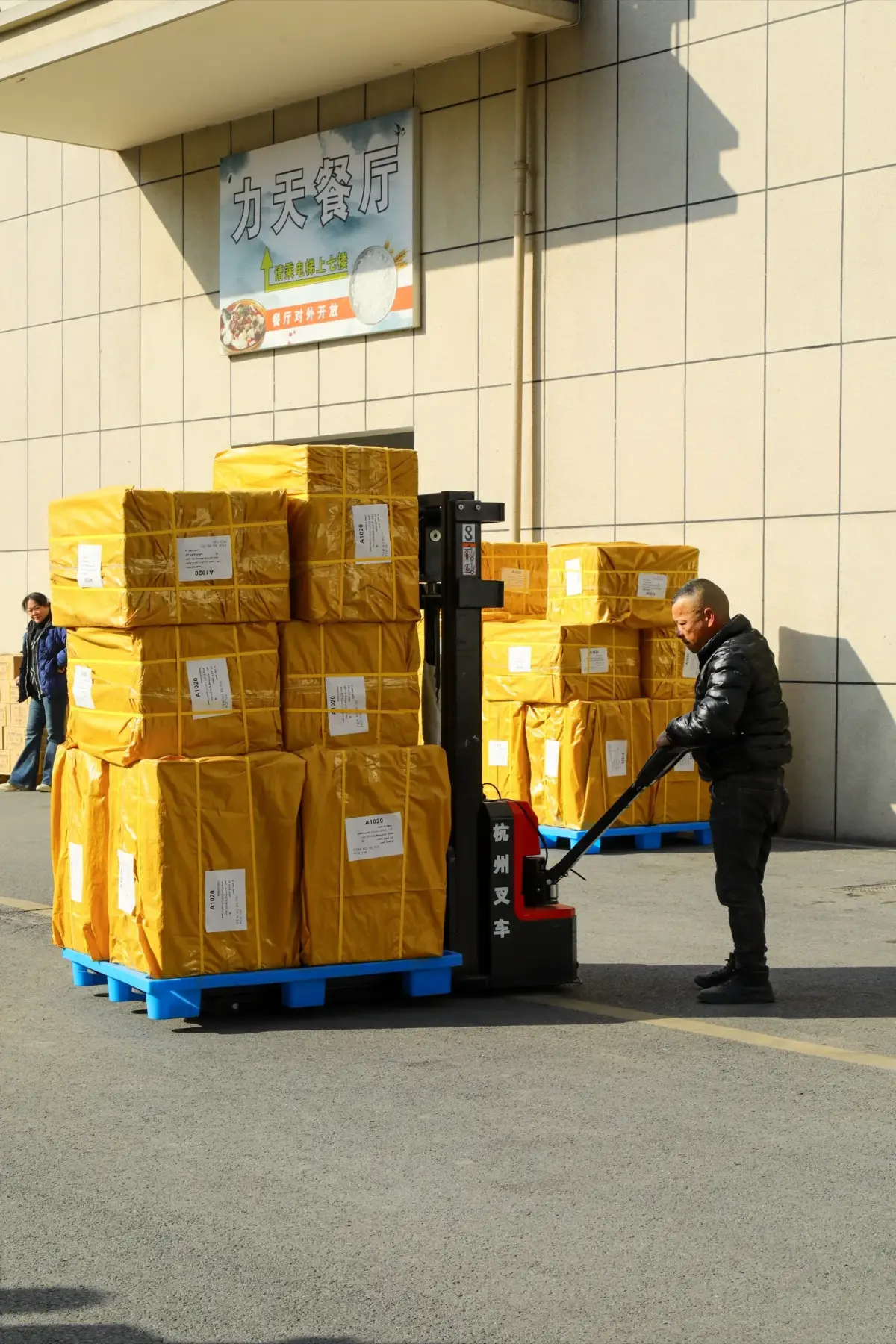
Buying questions, answered
Do I need a finished tech pack?
No. A reference photo plus target size and materials is enough for our 100+ designers to build the pattern; we confirm details on the sample.
How much does sampling cost?
Samples are paid and take 1-10 days depending on complexity. One revision round takes 2-3 days.
What is the MOQ for a fully custom pouch?
500 pieces per style for cosmetic bags. Single-color Pantone matching starts at 200 pieces.
Ready to sample your cosmetic bag line?
Send your brief and reference photos. Paid samples in 1-10 days, revisions in 2-3 days.
Materials and Construction Options for Custom Cosmetic Pouches
A custom cosmetic pouch lives or dies by its seams, its lining, and the way its opening behaves when a buyer's customer is standing in front of a mirror at 6 a.m. You can spec the prettiest fabric in the world. If the lining traps foundation and the zipper fights back, the pouch gets returned. So let's talk about what actually changes how the product performs, not just how it photographs.
The INDUSTRY REFERENCE gives us a clean way to think about this. Cleanability depends on surface smoothness, seam construction, corner geometry, and material compatibility with expected residues. That's the whole game. A wipe-clean liner reduces absorption. Welded or sealed seams provide better leak containment than ordinary stitched seams. A stitched bag may still use a removable waterproof insert when full seam sealing is unnecessary. Those three options are not interchangeable, and they cost different amounts.
Here's the comparison buyers ask for most often. Read it as a decision tool, not a ranking.
| Material | What it's good for | Where it fails |
|---|---|---|
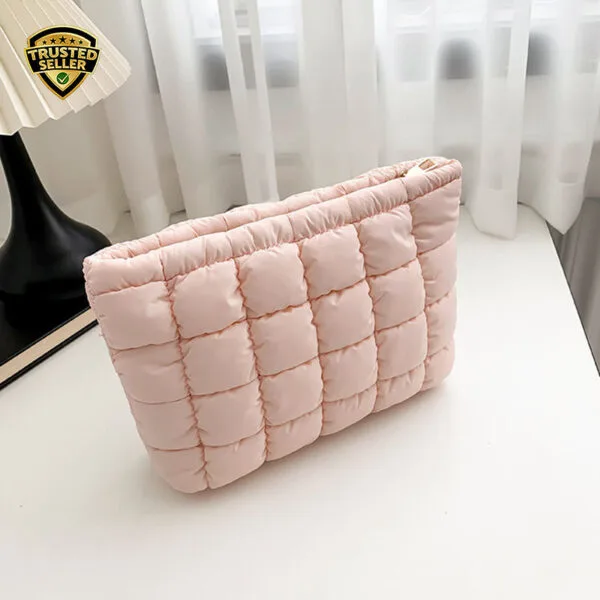
| Polyester fabric | Dimensional stability, wide printability, many weights, coatings, and recycled-content options. Great for printed cosmetic pouches that need to hold a shape. | Can feel cheap if spec'd too thin. Coating choice determines whether it resists spills or just looks like it does. |
| Nylon fabric | High strength-to-weight, good abrasion resistance. Coating and weave strongly affect water resistance. Good for pouches that get thrown in gym bags. | Not inherently leak-resistant. Needs a coating or lamination to handle liquid makeup spills. |
| Canvas | Durable plain-woven structure, texture, and abrasion performance. Excellent for monogram cosmetic pouch programs where the fabric itself is part of the brand feel. | Absorbs moisture and stains unless treated. Heavier than synthetics. Corners wear faster without reinforcement. |
| Transparent film | Visibility, wipe-clean pockets, travel organizers. Buyers who need TSA-friendly clear pouches or retail display logic choose this. | Scratches show. Stiffness varies by film grade. Welding quality determines whether it's actually leakproof or just leak-resistant. |
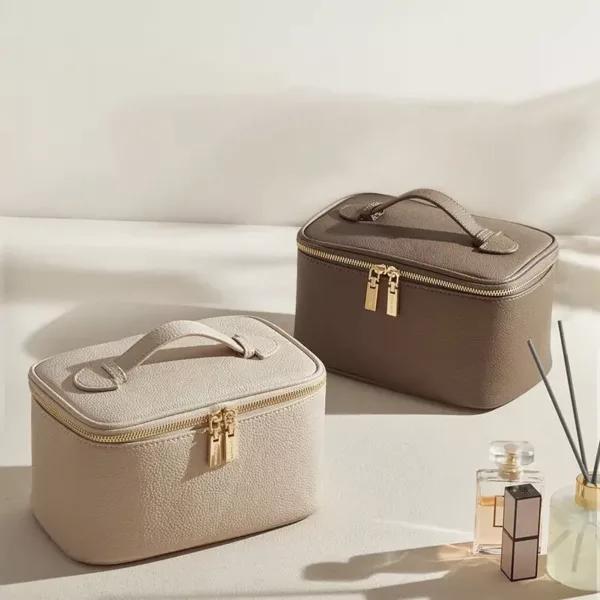
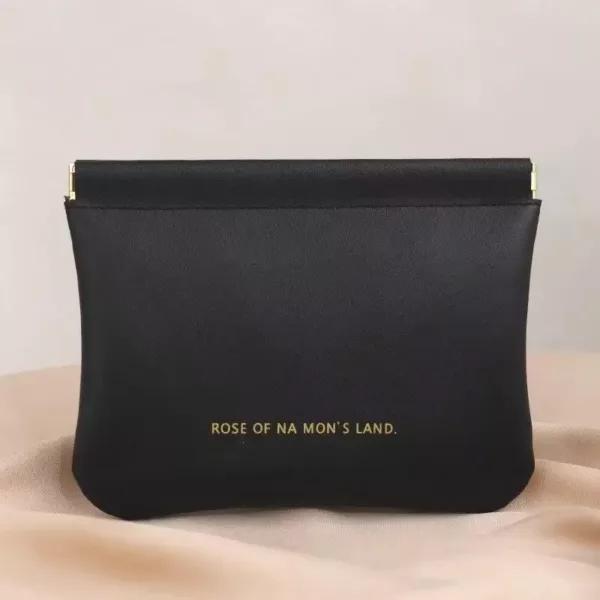
| Synthetic leather | Leather-like surface on a textile backing. Good for premium cosmetic pouch programs where hand feel matters and animal material is off the table. | Peeling at high-flex points if the coating is too thin. Edge treatment and colorfastness need control. |
One thing buyers miss: the lining is not a detail. It's the product. A polyester shell with a PEVA film liner behaves completely differently from the same shell with a coated nylon liner. The first wipes clean but can feel stiff. The second is softer but may absorb oily residue over time. If you're selling a custom makeup pouch that holds liquid foundation, ask the factory to show you a welded-seam sample. Then pour water in it. Then ask them to explain the difference between leak-resistant and leakproof. The reference defines leak-resistant as construction that delays liquid escape but is not guaranteed to remain liquid-tight under pressure. Leakproof means it's designed and tested to prevent liquid passage under stated test conditions. Those are different claims. They should cost different amounts.
For more on how these materials hold up across a full product line, see our makeup bag materials guide.
How Different Buyers Should Specify a Custom Cosmetic Pouch
Same product category. Completely different specification logic depending on who's buying and why. Here are three situations that show up in our inbox all the time.
First, a buyer who needs a custom makeup pouch for a subscription box. The pouch is a gift-with-purchase or a monthly insert. Cost per unit is brutal. The buyer cares about three things: landed cost, pack-flat shipping volume, and whether the pouch looks good enough on an unboxing video. This buyer should spec a simple polyester shell with a basic zipper, no welded seams, no removable insert. The opening should be wide enough to see contents but not so structured that it adds bulk. A flat pouch with a gusset that compresses is better than a boxy one. The buyer should confirm the MOQ with the factory, as it varies by material and construction. Lead time matters less than consistency, because subscription boxes run on a calendar.
Second, a buyer who needs custom cosmetic bags wholesale for a retail chain. This buyer is buying thousands of units. The spec has to survive a retail buyer's inspection, a shelf test, and a customer who will yank the zipper open in the store. The buyer should ask for a polyester or nylon shell with a coated lining, reinforced zipper tape, and a stitched seam with a removable waterproof insert if the chain sells liquid products. Standard zipper strength ratings vary by supplier, so the buyer should ask the factory to state the pull force in the specification. The buyer should also ask for a hang tag or header card option, because retail shelves punish pouches that can't hang. Packaging matters as much as the pouch itself.
Third, a buyer who wants a monogram cosmetic pouch for a boutique or a wedding party. This is a low-volume, high-perception product. The monogram is the product. The buyer should care about stitch density, thread color contrast, and whether the monogram location distorts when the pouch is full. A canvas or synthetic leather shell works well here. The buyer should confirm the logo process MOQ with the factory, because embroidery and debossing have different minimums. The buyer should also ask for a pre-production sample with the actual monogram on the actual fabric. Not a mockup. A sample.
If you're still narrowing down what kind of pouch fits your line, our product catalog shows the range of what's possible without custom tooling.
Customization That Changes Tooling, Cost, or Lead Time
Not all customization is equal. Some changes are just ink. Others are a new mold, a new die, or a new welding jig. Here's the honest split.
Changes that do NOT change tooling: fabric color from an existing swatch book, printed logo on a flat panel, zipper tape color if the factory stocks it, hang tag or poly bag choice, and adding a removable insert. These are spec-level changes. They affect cost per unit slightly, but they don't add weeks to the timeline.
Changes that DO change tooling: a custom-shaped pouch that needs a new cutting die, a welded-seam construction that needs a new RF or ultrasonic jig, a custom zipper pull with your logo, a debossed metal plate, or a monogram location that requires a new embroidery frame. These changes add cost and lead time. A new cutting die might add a few days. A custom zipper pull can add two weeks or more. A welded pouch with a new shape can add three weeks because the jig has to be machined and tested.
The trap is thinking that because a change is small, it's cheap. A custom zipper pull is a tiny part. It's also a tooling change. A buyer who asks for a custom pull on a 500-piece order is paying for tooling amortized over 500 units. That's fine if the brand needs it. It's not fine if the buyer assumed it was free.
For a deeper look at one material family where this tooling logic gets more complicated, see our mesh cosmetic bags page. Mesh panels change how the pouch is cut, sewn, and reinforced, and that changes the quote.
What to Check Before Approving Production
You've seen the sample. It looks right. Now what? Before you sign off, check these points. Most of them come straight from the reference's guidance on cleanability, leak control, and material specification.
First, check the seam type against the claim. If the pouch is sold as leakproof, the seams must be welded or sealed. If they're stitched, the claim is wrong. If the pouch is sold as leak-resistant, stitched seams are acceptable, but the buyer should confirm the factory's test method. What liquid? What pressure? What duration? A pouch that holds water for ten seconds is not the same as one that holds water for ten minutes.
Second, check the lining. Run a cotton swab with a bit of foundation or sunscreen across the lining. Does it wipe clean? Does it smear? Does it absorb? The reference says cleanability depends on surface smoothness, seam construction, corner geometry, and material compatibility. If the lining is textured, it will trap product. If the corners are sharp, they'll be hard to clean. Ask for a wipe-clean test on the actual lining, not a generic swatch.
Third, check the opening. A wide opening improves visibility and reduces the need to remove every item. If the pouch is narrow-mouthed, the user has to dig. That's a return waiting to happen. Ask the factory to show you the pouch open, with the zipper fully retracted. Can you see the bottom? Can you get a hand in? If not, the spec is wrong.
Fourth, check the claim language. If the pouch is marketed as leakproof, the factory should be able to state the test conditions. The reference is clear: leakproof construction is designed and tested to prevent liquid passage under stated test conditions. If there are no stated test conditions, the word leakproof is a liability. Same with waterproof. Same with wipe-clean. These words mean something specific in a spec sheet. If the factory can't define them, don't print them on the packaging.
Fifth, check the attachment points. If the pouch has a hanging hook, the reference says it requires reinforcement because the complete load is concentrated at one attachment point. A hook that's sewn into a single layer of polyester will tear. A hook with a reinforcement patch will hold. Ask to see the reinforcement. Then pull on it.
These checks take an hour. They save weeks of back-and-forth after production. If you want to see how these principles play out in a specific product, our clear PVC toiletry pouch shows a welded construction where leak control is the whole point of the design.