Canvas Cosmetic Bag Wholesale: Fabrics, Specs, MOQs
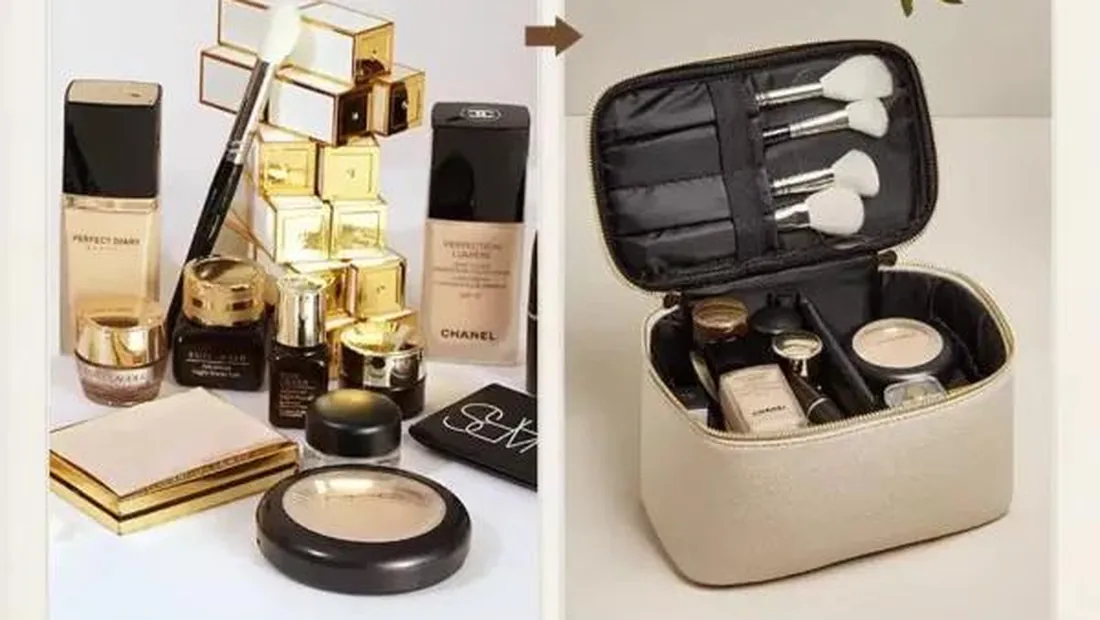
A canvas cosmetic bag is a plain-woven pouch built from cotton or a cotton-rich blend. That weave is the whole point. It gives the bag body, texture and abrasion resistance that a thin synthetic shell cannot match at the same thickness. For canvas cosmetic bag wholesale programs, the fabric decision drives almost everything downstream: how the pouch sits on a counter, how a print reads, how the seams sew, and how many units fit in a carton.
Say a buyer walks into a meeting with a sketch, a Pantone chip and a target ship window. The first useful question is not price. It is which canvas weight the format actually needs.
Why Canvas Becomes a Cosmetic Bag: Structure, Texture and Wear
Canvas is a durable plain-woven fabric, commonly cotton or a fiber blend, selected for structure, texture and abrasion performance. Cotton duck is the tighter cousin. It has a smooth, firm face and closely packed yarns, so it resists snagging better than an open weave and takes a cleaner print edge.
Weight changes behaviour. A heavier canvas holds a boxy shape because the yarns are stiff enough to resist folding under their own load. A light canvas drapes and slouches. Neither is wrong. It depends on whether the pouch must stand up on a bathroom shelf or collapse into a travel bag.
Two risks follow canvas through its whole life. The first is crocking, which is color transfer from rubbing, moisture or daily handling. The second is colorfastness under light and repeated contact. Both are controlled by dye selection and by testing the actual finished bag, not the greige roll. A pouch that lives in a handbag gets handled more than most apparel.
Hand feel matters commercially too. Softness, stiffness, smoothness and drape are what a buyer feels in a showroom, and they are set by weave, yarn size and finish. If the sample feels waxy or boardy, the bulk will too.
Matching Canvas Weight to Bag Format: 8, 10, 12 and 15 oz
This is the question most sourcing pages skip, and it is the one that decides whether a sample gets approved. The canvas range commonly runs 8, 10, 12 and 15 oz, with nylon and polyester options sitting alongside at their own gram-per-square-metre bands and recycled rPET available as an alternative face.
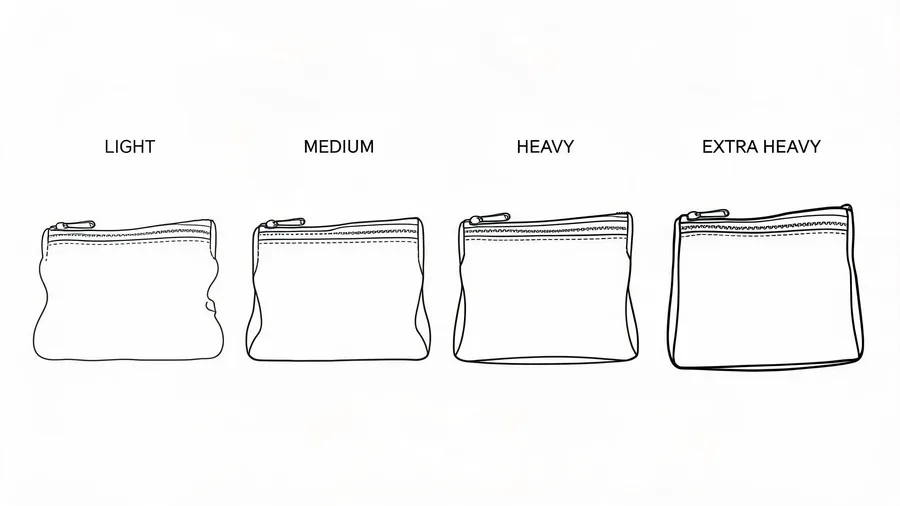
Think in formats, not numbers alone.
- 8 oz and 10 oz suit flat zip pouches and drawstring liners. Drape matters more than structure here, and a lighter face folds flat for gifting or travel sets.
- 12 oz is the workhorse for boxed or gusseted travel cases that need to stand up on a counter without a rigid insert.
- 15 oz and heavier fits structured cases, flat-bottom pouches and any bag with a rigid base panel. The fabric itself carries the shape.
Ounces and GSM are two languages for the same idea. Ounces describe weight per square yard; GSM describes grams per square metre. Neither one alone defines the fabric. Fabric count, yarn size and weave describe construction, and a 12 oz canvas woven from coarse yarns behaves nothing like a 12 oz canvas woven tight.
Sewing changes with weight. Heavier canvas needs a larger needle, produces bulkier seam allowances, and leaves harder fold lines. A pattern that sews cleanly in 10 oz can fight the machine in 15 oz. That is why the pre-production sample exists.
Lining, Interlining and Zipper Pairing for Canvas Pouches
Cosmetic use means spills. A cleanable liner such as PEVA film or coated polyester protects the canvas face and wipes down without soaking through. It also hides the raw inside of the weave.
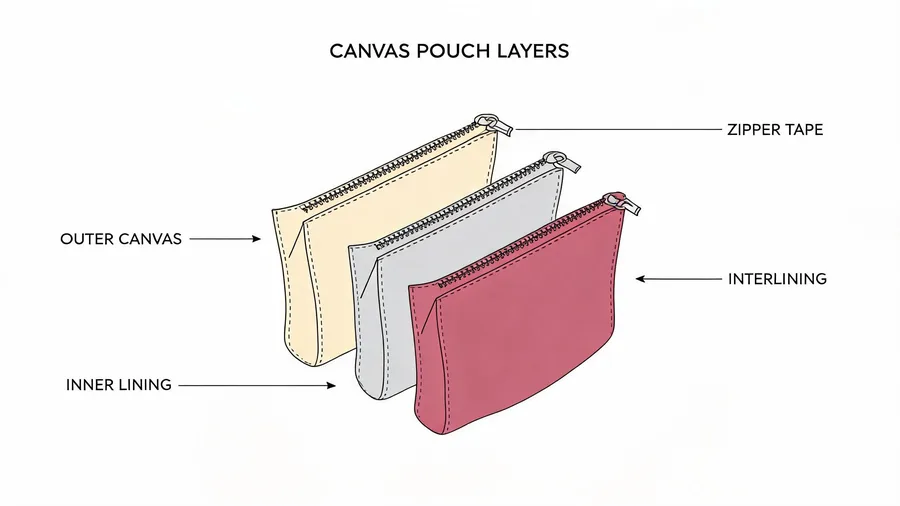
Soft canvas needs stabilization. A nonwoven or backing layer bonded or stitched behind the face stops seam pull and keeps the panel from distorting when the pouch is overfilled. For a semi-rigid base, closed-cell foam or a thin plastic board does the job. Both are standard in cooler and structured bag construction.
Zippers are the failure point buyers notice first. Tape width, slider finish and whether a brass or nylon zip suits the canvas weight all matter. A heavy canvas pulls on a light tape. A nylon coil is more forgiving on a soft, thick face; a metal zip reads more premium but needs a stable panel behind it.
Reinforcement patches belong at every high-stress attachment and seam point, especially where a handle or strap meets the body. Skipping them is the cheapest way to build a pouch that fails in month three.
Decoration on Canvas: Screen Print, Embroidery and Heat Transfer
Decoration is where canvas and synthetics diverge most, and no ranking page explains it well.
Screen printing forces ink through a prepared screen. It suits solid colors and repeat production when the substrate and ink system are compatible. On canvas, the weave texture shows through the ink, which is either a feature or a problem depending on the artwork. Digital textile printing handles detailed graphics and shorter runs, with ink chemistry matched to the fiber. Dye sublimation bonds disperse dye with suitable polyester surfaces under heat and pressure, so it fits polyester-rich faces better than pure cotton.
Embroidery is the durable choice, and the fussiest. Thread, backing, needle selection and stitch density all need control. Dense stitching on a heavy canvas panel pulls the weave and distorts the shape, so a logo that looks fine on screen can pucker the finished pouch. Backing choice is not optional here.
Heat-transfer graphics need validation for adhesion, stretch, wash and abrasion before bulk. Woven and printed labels, plus debossing and embossing, are lower-risk identification options when the artwork is simple. For a comparison of how these methods behave across substrates, see the makeup bag materials guide.
Specs Before Quote: Tech Pack, BOM and Colour Standards
A tech pack is the controlled product specification. It holds dimensions, materials, construction details, artwork, labels, packaging and test requirements. Without one, every supplier quotes a different bag.
The bill of materials lists every material, component, quantity, color and supplier reference for one product. It is what makes a quote comparable across factories.
Critical dimensions and tolerances deserve special attention. A zipper length or gusset depth that drifts will not fit the intended contents, and a pouch that fails that test comes back as a return. Tolerance is the permitted variation from a nominal value, and it belongs in writing.
Color gets approved before bulk, not after. A lab dip is a small dyed material sample submitted for color approval; a strike-off approves artwork, color, scale, registration and print quality. Both sit against an agreed color standard. On the acceptance side, the workmanship standard, AQL sampling and defect classification form the language both sides use to judge a shipment.
Before any of that, read the bulk cosmetic bags buying guide for the wider sourcing picture.
Sampling and Production Steps for a Canvas Cosmetic Bag Order
Imagine a buyer approving a sketch and expecting production to start next week. It does not work that way, and the sequence protects both sides.
- Proto sample tests concept, shape and initial dimensions before anything is committed.
- Fit sample checks access, opening geometry and how the pouch behaves when packed.
- Pre-production sample is made with intended bulk materials and approved methods.
- Golden sample becomes the approved physical reference for production workmanship and appearance.
Change control is the paperwork that keeps revisions honest. Any change to materials, patterns, artwork, tests or packaging gets documented and approved, so the golden sample stays the truth.
Lead time is the elapsed time for a defined sourcing or production activity, and it moves with structural complexity. A flat zip pouch and a gusseted case with a rigid base are not the same build. Buyers often ask why one canvas pouch quotes faster than another; the answer is usually panels, lining and decoration steps, not fabric price.
MOQ, Volume and Freight Realities for Canvas Bags
MOQ is not one number for a whole range. It is a minimum per material, component, color or finished product. A Pantone-matched canvas color and a custom woven label each carry their own minimum, because each one triggers a separate setup.
Yield and marker efficiency explain why fabric weight and panel layout shift unit cost. Marker efficiency is the percentage of material area used by pattern pieces in a cutting layout. A heavier canvas wastes more at the edges and folds thicker in the finished bag.
That thickness changes carton volume, and carton volume changes freight class. A 15 oz structured case ships fewer units per carton than a flat 8 oz pouch. Landed cost per unit reflects that, even when the fabric itself costs the same.
Where a lighter, lower-cube alternative fits, a clear cosmetic bag or a nylon cosmetic bag bulk program can move more units per pallet. Nylon and polyester are dimensionally stable and print cleanly, so they suit high-volume promotional runs where canvas texture is not the selling point.
Comparison: Canvas Weight Against Bag Format
| Canvas weight | Typical format | Shape behaviour | Decoration notes |
|---|---|---|---|
| 8 oz | Flat zip pouch, drawstring liner | Drapes, folds flat | Screen print reads soft; embroidery can pull a thin panel |
| 10 oz | Flat pouch, small travel set | Light structure, some slouch | Good for digital print and small logos |
| 12 oz | Boxed or gusseted travel case | Stands with a light insert | Screen print and embroidery both viable |
| 15 oz and up | Structured case, flat-bottom pouch | Holds shape without an insert | Dense embroidery needs backing control |
Use this as a starting frame, not a rule. The tested specification decides what any given pouch will actually do.
A Buyer Checklist Before Requesting a Quote
- Format and dimensions, with critical dimensions flagged and tolerances written.
- Canvas weight in ounces or GSM, plus fabric count, yarn size and weave.
- Liner type and whether it must be wipe-clean.
- Base structure: none, foam, or plastic board.
- Zipper type, tape width and slider finish.
- Decoration method, artwork file and color standard.
- Label type: woven, printed or thermal-transfer.
- Packaging format and carton expectations.
- Target quantity per color, since color drives its own minimum.
Ask any supplier for the same list. The answers tell you more than a sample photo ever will.
When the spec is ready, send it through the contact page for a quote.
Frequently Asked Questions
What canvas weight should a wholesale cosmetic bag use?
It depends on the format. An 8 oz or 10 oz canvas suits flat zip pouches and drawstring liners where drape matters more than structure. A 12 oz canvas works for boxed or gusseted travel cases that need to stand up with a light insert. A 15 oz or heavier canvas fits structured cases and flat-bottom pouches that hold their shape without an insert. Weight is only one variable, so fabric count, yarn size and weave belong in the spec too. The tested specification decides real performance.
Can canvas cosmetic bags be customised with a logo?
Yes, through several methods. Screen printing suits solid colors and repeat production when the substrate and ink system are compatible. Digital textile printing handles detailed graphics and shorter runs. Embroidery gives a durable raised design, though dense stitching on heavy canvas can distort the panel, so backing and stitch density need control. Heat-transfer graphics require validation for adhesion, stretch, wash and abrasion. Woven and printed labels, debossing and embossing are lower-risk options for simple identification marks.
How does a canvas cosmetic bag compare with a nylon cosmetic bag in bulk?
Canvas brings texture, structure and abrasion resistance, and a heavier weight holds a boxy shape without an insert. Nylon is dimensionally stable, lighter and lower in cube, so more units fit per carton and per pallet. Nylon also prints cleanly and dries faster. Canvas tends to read as a premium or gift item; nylon suits high-volume promotional runs where texture is not the selling point. The right pick depends on the format, the decoration and the freight budget, not on one fabric being better.
What sizes work for a large canvas cosmetic bag?
There is no single standard size, and buyers should not treat any published dimension as a rule. Large canvas pouches vary widely depending on whether they hold brushes, bottles, a travel set or a full vanity kit. The practical approach is to define the intended contents first, then set critical dimensions and tolerances in the tech pack so a zipper length or gusset depth cannot drift. A fit sample confirms access and opening geometry before bulk. Real dimensions come from the approved specification.